
Dog Going Wild When Visitors Come at Christmas?
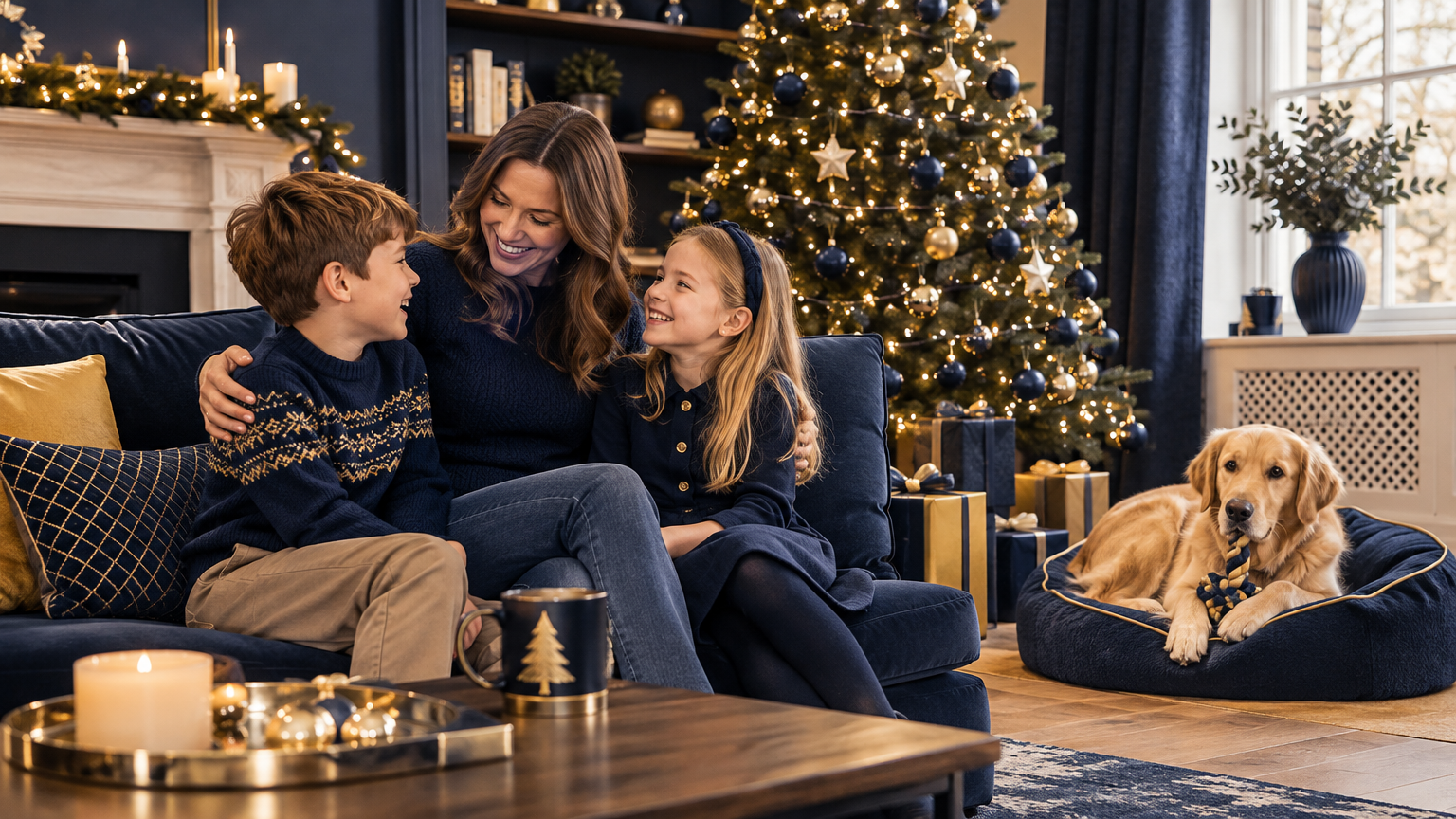
The doorbell goes, the dog launches at the door, and suddenly you're holding a tray of mince pies while apologising to Grandma. If that sounds familiar, you're far from alone. Christmas is joyful, but for a dog it can be a lot to take in. The good news is that a calmer festive season is very achievable, and you don't need a "perfectly obedient" dog to get there.
Table of Contents
- Why does my dog go wild when visitors arrive?
- Get The Puppy Planning Playbook
- What to do instead: a calm-arrivals plan
- Common mistakes (and why they happen)
- When to get help
- Frequently asked questions
- Should I shut my dog away when guests arrive?
- Is it too late to start training before Christmas?
- My puppy has never met lots of visitors. What should I do?
- Want calmer Christmases in Newbury?
- Comments (2)
- Related Articles
- Join Our Pack
Why does my dog go wild when visitors arrive?
Your dog isn't being naughty. In December the house fills with new people, new smells, wrapping paper, music and a tree in the lounge. Routines change, and so does the mood of the household, which dogs pick up on very quickly.
Here is what is usually going on:
- Excitement. Visitors are the most exciting thing that happens all day. If jumping and barking have got attention in the past, even just a "no, down!", your dog has learned that this is how to join in.
- Over-arousal. Dogs can only cope with so much stimulation. When too much happens at once, their ability to think and settle drops. It's a bit like a toddler at a party who has had too much squash.
- Uncertainty. Some dogs bark or hover because they aren't sure about strangers. That is worry rather than bad manners.
- Disrupted routine. Fewer walks, later meals and a busy house mean less sleep and more stress. Tired, wound-up dogs find it harder to cope.
Adolescent dogs (roughly 6 to 18 months) and young puppies often find this hardest, because their self-control is still developing. This is a stage they grow through.
Get The Puppy Planning Playbook
Thinking of getting a puppy? Download our free 9-page workbook to help you choose the right breed, evaluate breeders, and prepare your home.
Download Free Planning PlaybookWhat to do instead: a calm-arrivals plan
Practise a few weeks before the big days if you can, but even a few days helps.
- Give your dog a "place". Choose a bed or mat and reward your dog for stepping onto it, then for lying down. Drop small treats between their paws while they stay settled. Keep sessions short, a minute or two at a time.
- Build up the doorbell. Ring the bell (or play a doorbell sound) and reward your dog for going to their mat. Start easy, with no one at the door, and only make it harder once they succeed.
- Meet and greet on your terms. Before guests arrive, put your dog in a calm, comfortable space with a long-lasting chew, such as a stuffed Kong or a lick mat. They can join in once everyone has settled and taken their coats off.
- Ask guests to help. Ask visitors to ignore the dog at first, with no eye contact, no excited voices and no hands waved about. Calm behaviour gets the attention. Jumping gets none.
- Reward what you like. Four paws on the floor? A treat. Lying quietly under the table? A treat. Dogs repeat what pays.
- Walk and sniff first. A good walk with time to sniff before guests arrive helps your dog unwind. Gentle sniffing is more calming than a frantic game of fetch.
- Plan breaks. Offer a quiet room with water and a bed where your dog can rest away from the noise, especially if there are children visiting. Everyone, including the dog, benefits from a breather.
If you have children at home, always supervise dogs and children together, and make sure your dog can retreat to somewhere children can't follow.
Common mistakes (and why they happen)
- Shouting or pushing the dog away. This is understandable, but to your dog it is still attention, and it adds to the excitement.
- Expecting too much, too fast. A dog who has never practised settling won't manage it with ten guests and a full table. Set them up to succeed.
- Telling the dog off for being worried. If your dog growls or backs away, they are telling you they are uncomfortable. Punishing that can take away the warning without taking away the worry. Give them space instead.
- Skipping rest. Overtired dogs behave worse. Plan for plenty of sleep.
- Leaving tempting hazards around. Christmas food and decorations can be dangerous for dogs. Chocolate, grapes, raisins (including in mince pies and Christmas pudding) and some sweeteners are toxic, and cooked bones can splinter. Keep them out of reach and ask your vet if you are unsure.
When to get help
Please speak to your vet first if your dog's behaviour changes suddenly, as pain or illness can sometimes be behind it.
If your dog growls, snaps or has bitten anyone, don't try to tackle it yourself with online tips. Please get professional one-to-one help. The same applies if your dog seems very frightened, or you dread visitors arriving. The sooner you get support, the easier it usually is to put right.
Frequently asked questions
Should I shut my dog away when guests arrive?
Not as a punishment. A calm break in a quiet room with a chew can be a kind way to help your dog cope. Introduce it positively so they see it as a treat, not as being left out.
Is it too late to start training before Christmas?
No. Even a week of short, daily mat practice makes a difference. Aim for progress rather than perfection.
My puppy has never met lots of visitors. What should I do?
Keep introductions short and calm, let your puppy approach in their own time, and give them rest between visits. Don't force interactions.
Want calmer Christmases in Newbury?
Every dog and every home is different, and what works in a busy farmhouse near Hungerford won't be the same as in a terraced house in Newbury. At The Family Dog Academy, Anthony offers a free, no-obligation in-home discovery consultation across Newbury and West Berkshire. He meets your dog where the challenges actually happen and helps your family find a calm, kind plan that fits your life. If you'd like some support, get in touch. We'd love to help your family enjoy the festive season together.
Comments (2)
This was incredibly helpful! We've been struggling with this exact issue for weeks. I'm going to try these techniques starting today.
Great article. The point about positive reinforcement really resonated with me. It makes so much sense when you think about it from the dog's perspective.
Related Articles
Join Our Pack
Sign up for our newsletter to get expert dog training tips, latest blog posts, and exclusive offers delivered straight to your inbox.
